
the perfect childhood bedroom - the art of designing for longevity with English charm
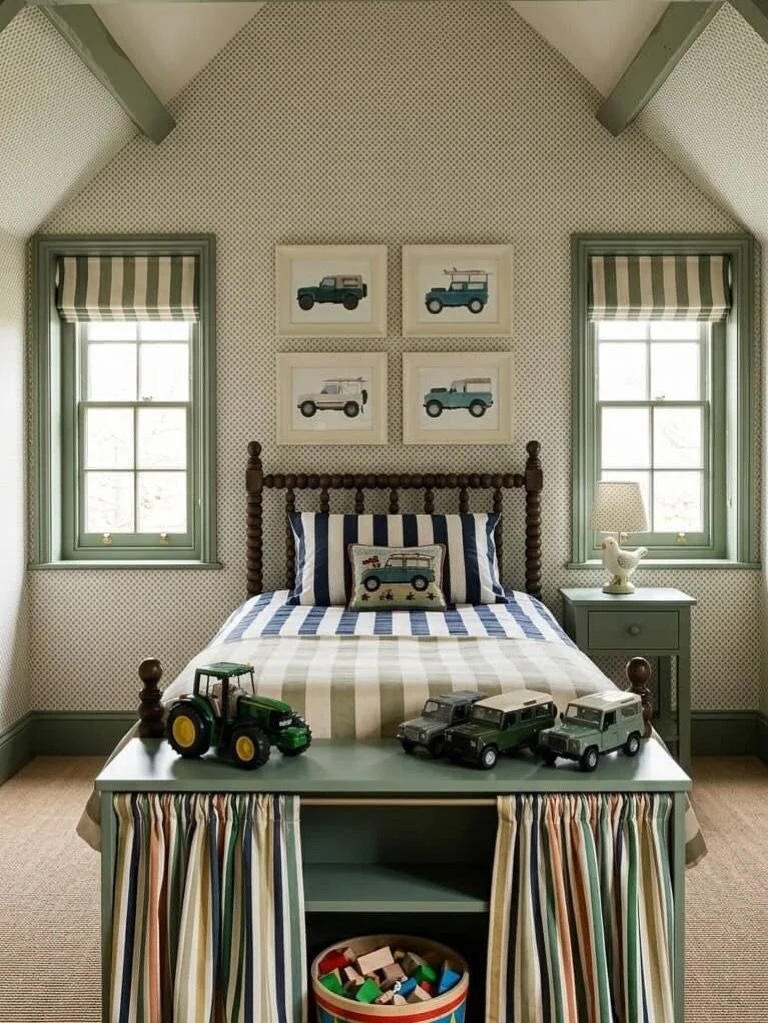
Image Credit: Beautiful child’s bedroom designed by Pretty in Print Art
@prettyinprintart
When we approach the interior design of a child’s bedroom at The Layered Look, we move away from the themed and towards the timeless. Much like a classic English home, a child’s room should feel like a soulful and natural extension of the rest of the house. It should be a space that breathes with character and evolves gracefully from the first nursery years through to the teens.
Here is how we approach children's room design with an emphasis on soft warmth, traditional bones, and that effortless, elevated elegance.
The Psychology of Colour: Warmth Over Stimulation
The primary London Bus reds often found in children’s decor can be surprisingly jarring for a developing mind. Instead, I lean towards soft, warm shades that wrap a room in a quiet and nurturing hug.
Think of a weathered terracotta, a creamy oat, or a gentle plaster pink. In the world of luxury interior design, these tones provide a sophisticated backdrop that fosters a sense of security and calm. They feel light and airy during the day, yet transform into a cosy and restful sanctuary once the evening lamps are turned on.
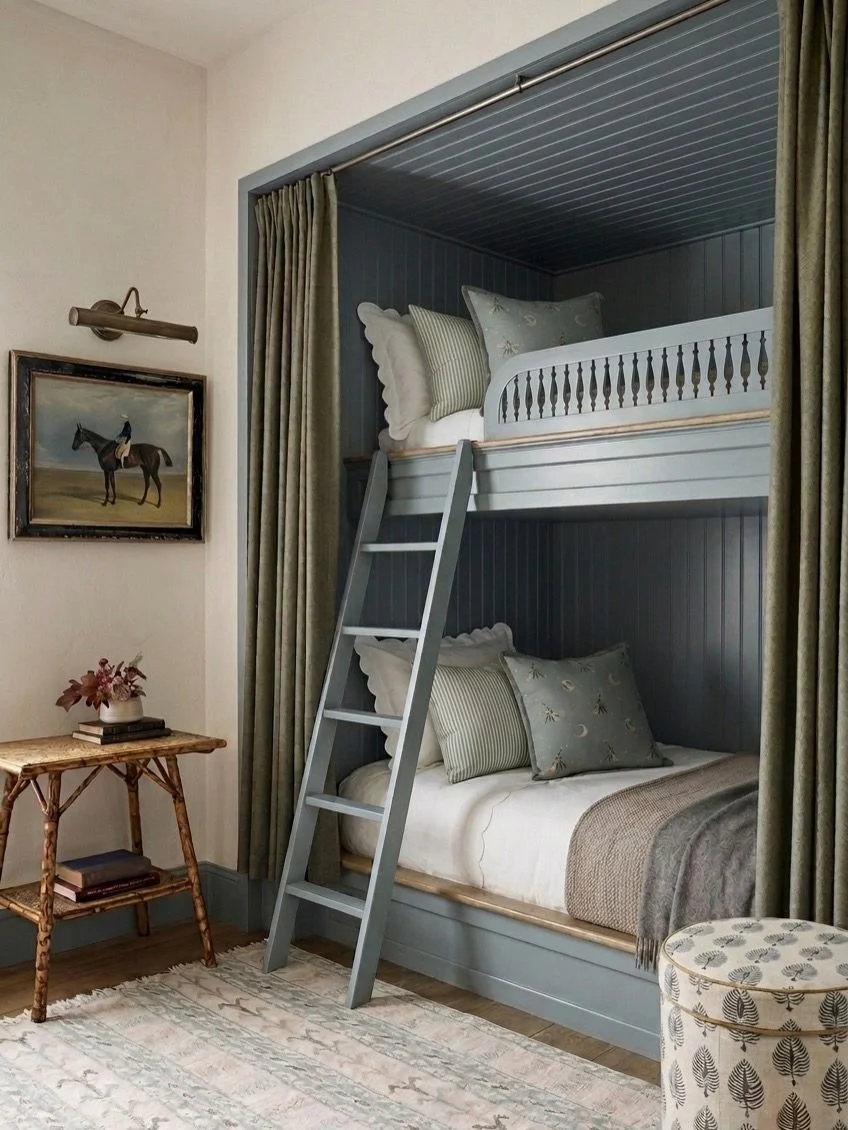
Bunkbed design by The Layered Look interiors
Traditional Bones, Not Babyish Rooms
The secret to a room that ages beautifully is to invest in proper furniture from the start. We look for pieces with classic English silhouettes, such as an oak chest of drawers with dovetail joints or a well-made bobbin-leg bedside table.
Avoid the nursery set aesthetic. Instead, opt for a classic upholstered headboard in a soft linen check or a timeless brass bed frame. These are heirloom pieces that carry a sense of history. They will look just as relevant for a teenager as they do for a toddler, which is a key principle in sustainable interior design as it involves creating spaces that do not require a complete overhaul every few years.
Pattern Play: Whimsy Without the Noise
Traditional English design is synonymous with pattern, but in a bedroom, the scale must be handled with restraint to ensure a restful night’s sleep. The goal is to create interest through textural layers rather than a single loud statement.
Try pairing a classic, medium-scale floral or a delicate woodland wallpaper with smaller, tighter prints. A soft ticking stripe or a hand-blocked quilt works beautifully here. By keeping the palette tonal and muted, you achieve that collected feel and a sense of whimsy that never feels chaotic or over-stimulating at bedtime.
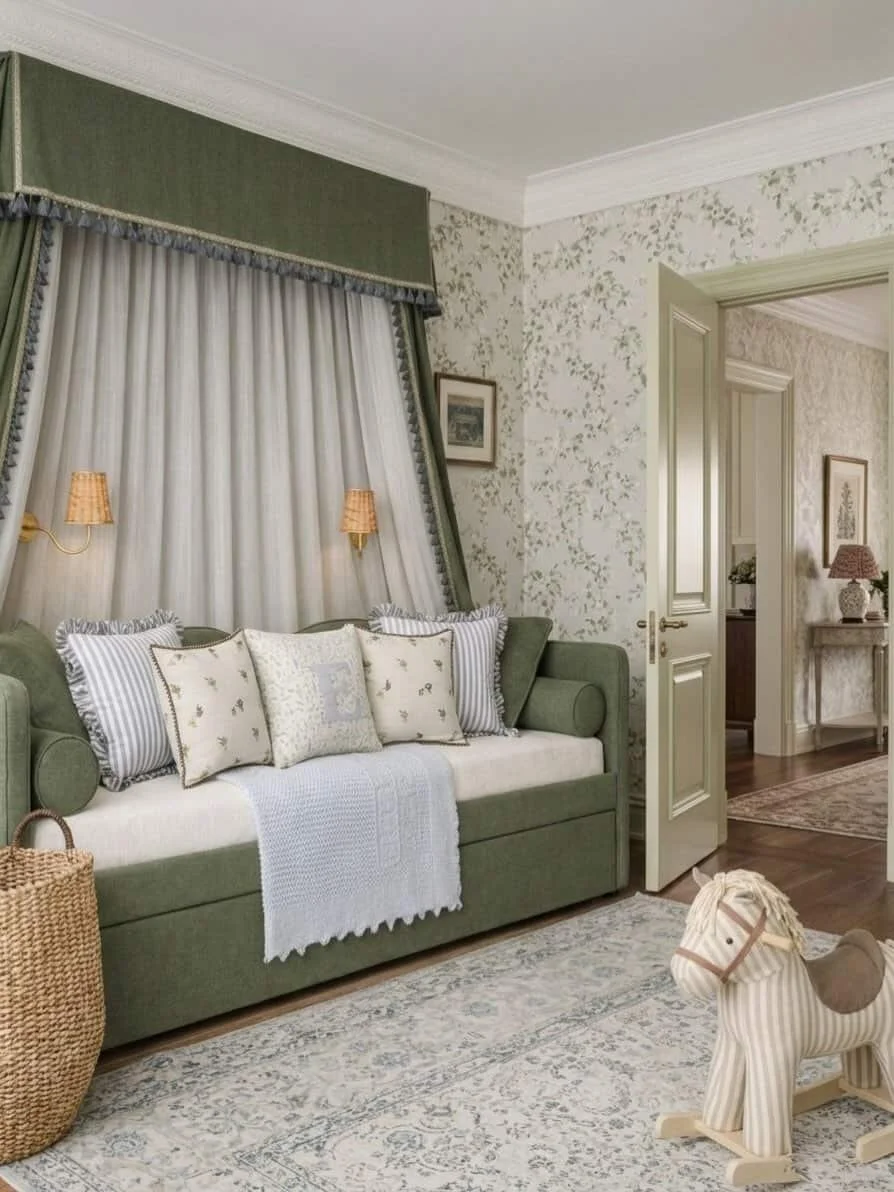
The Importance of Layered Lighting
In a refined interior, lighting is the architect of atmosphere. A harsh overhead light is far too clinical for a child’s sanctuary.
We prefer to layer light sources to ease the transition from play to sleep:
* The Ambient: A fabric-shaded pendant to diffuse a soft and even glow.
* The Task: A classic swing-arm brass wall lamp for bedtime stories.
* The Accent: A small, pleated-shade lamp on a dresser. This acts as a sophisticated night-light, providing a warm and low-level ambience that feels grown-up yet comforting.
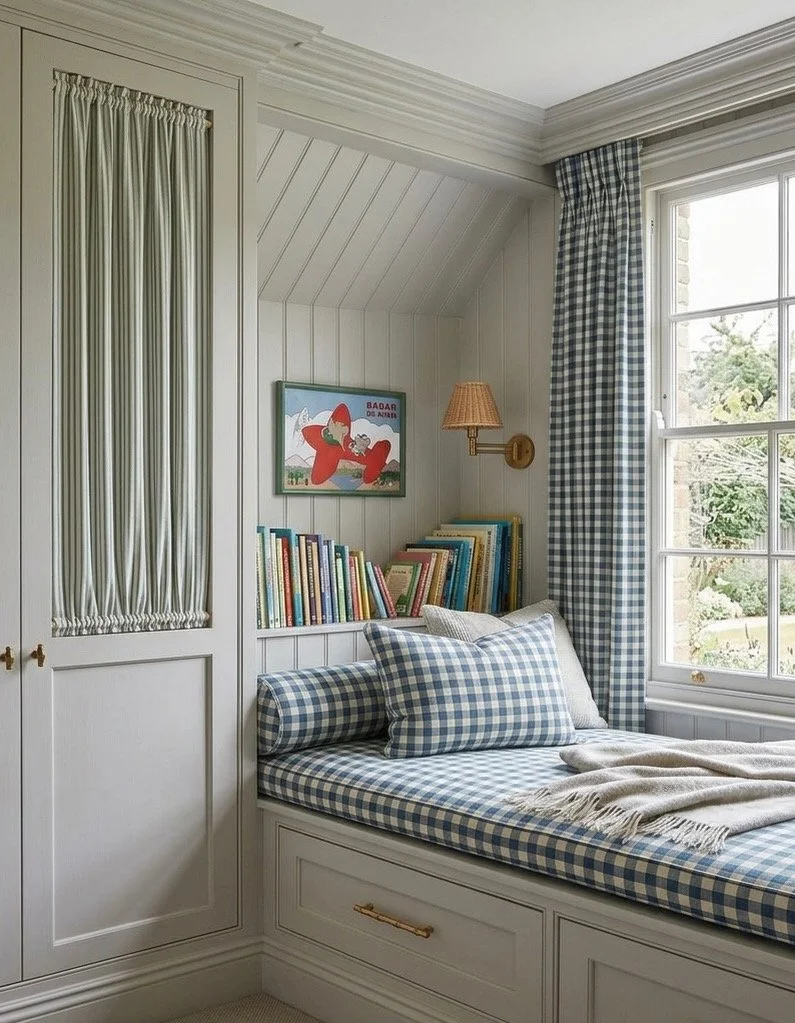
Little boy’s bedroom design by The Layered Look interiors
Finishing Touches: The Tactile Detail
It is the final, thoughtful layers that bring a room to life. We lean into natural materials and bespoke details that feel as good as they look:
* Natural Textures: A high-quality wool rug or a classic flatweave adds warmth and stands up to years of floor-based play.
* Framed Memories: Rather than temporary stickers, frame vintage botanical sketches or a piece of your child’s own artwork in a classic wooden frame to give it a sense of importance.
* Elevated Hardware: Swap standard handles for unlacquered brass or antiqued bronze knobs. These jewels of the room age beautifully, gaining a patina that adds to the room’s story over time.
Designing a child’s room is a beautiful opportunity to blend traditional sensibilities with a sense of wonder. By focusing on quality, warm tones, and thoughtful layers, you create a sanctuary that isn’t just a place to sleep, but a space to grow.